Blog · October 31, 2026
We took this photo near the condo in Keystone: a bull moose standing in the road among the aspens, antlers and all. Moose, deer, foxes and the occasional bear are part of everyday life here, and seeing them is one of the quiet joys of a stay. They are also wild animals, and a few simple habits keep both you and them safe.
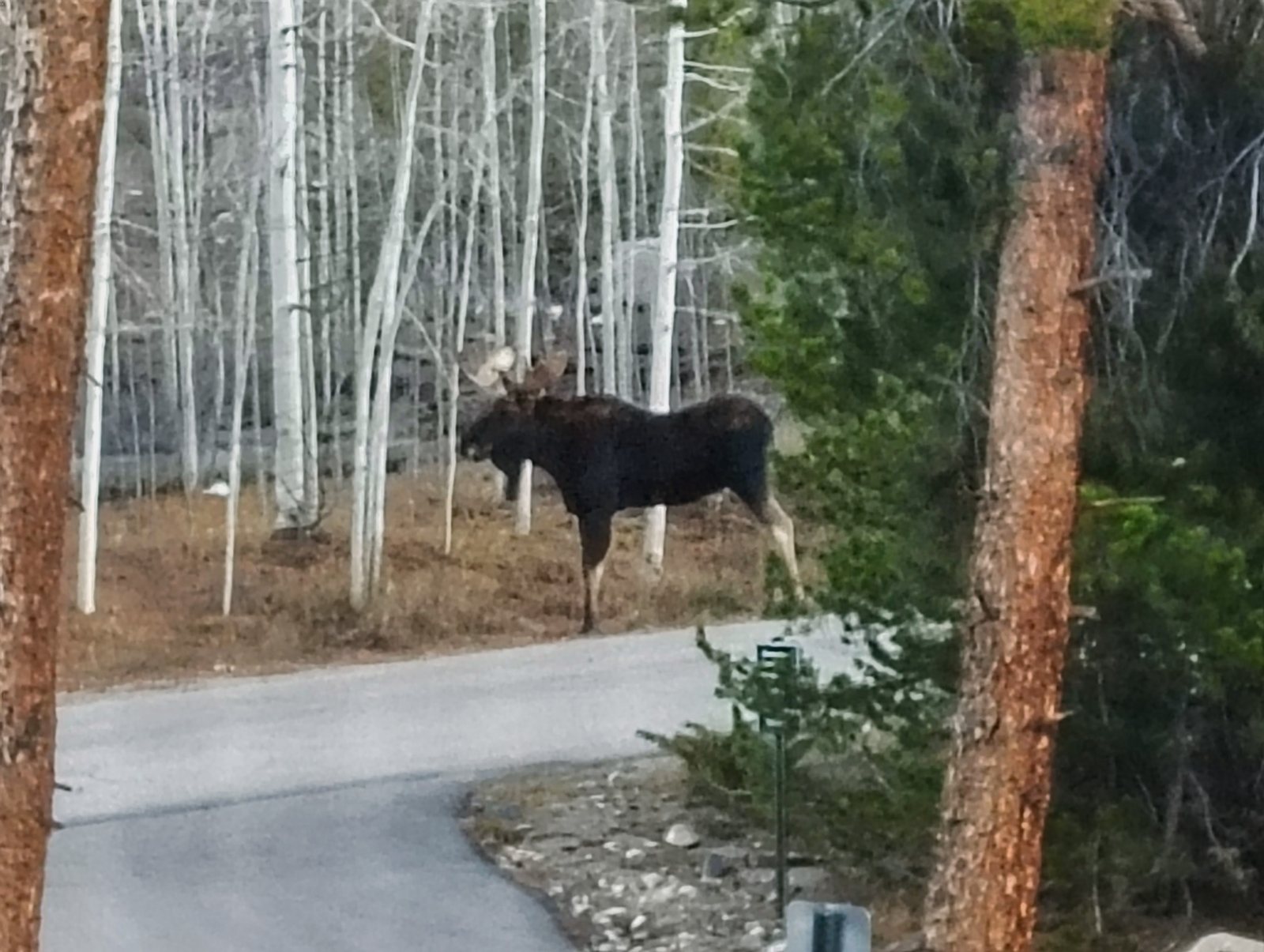
Give moose plenty of space
Moose are the animals we want guests to take most seriously. They do not fear people the way deer often do, they will tolerate a closer approach than is actually safe, and they can move much faster than they look — Colorado Parks and Wildlife notes that moose can run up to 35 miles an hour. Give them at least 50 feet, and more if you can. The Town of Breckenridge uses that 50-foot minimum, and some CPW staff suggest viewing from 50 to 100 yards. Use a zoom lens. Never walk up for a closer photo.
Dogs are a special concern. Moose treat dogs the way they would a wolf, one of their main predators, and that instinct has led to serious injuries to people and pets. Keep your dog on a short leash and under control, or leave the dog inside. A loose dog that runs back to you can bring the moose with it.
Watch the moose's body language. Signs that it is agitated include ears laid back, hair raised on the neck, a lowered head, swaying, licking of the snout, or a cocked head. If the moose is reacting to you, you are already too close. Back away. If it charges, run and put something solid between you — a tree, a boulder or a car. Unlike with a bear, running from a moose is usually the right move. Report a moose that behaves dangerously toward people to Colorado Parks and Wildlife.
Bears, trash and cars
Most conflicts with black bears start with food, trash, pet food or other attractants people leave out. CPW says most Colorado bears are active from mid-March through early November, and in the fall they feed intensely to put on weight before they den. A warm spell can still bring a bear out in early winter.
Keep trash secured. Colorado Parks and Wildlife asks people to store trash indoors overnight and to use wildlife-resistant containers. In unincorporated Summit County, disposal rules say cans may go out for collection only after 6 a.m. on pickup day, fully closed with no gap under the lid — not in a loose bag — and should be back in their usual spot by 10 p.m. the same day. Never leave food, trash, coolers or anything scented in a parked car, and keep the windows up and the doors locked. Bears can and do break into vehicles for a snack.
Elk, deer, mountain lions and foxes
Elk and mule deer are common around Keystone, especially at dawn and dusk. They can injure people and pets, particularly when they are protecting young or feel crowded by a dog. Give them room, keep dogs leashed, and never get between a mother and a calf or fawn.
Mountain lion sightings are uncommon, but lions live throughout this part of Colorado and are most active from dusk to dawn. If you ever meet one, do not run. Stand tall, speak calmly, pick up small children or pets, and back away slowly. If a lion behaves aggressively, make yourself look larger, make noise, and fight back if you are attacked.
Foxes are frequent neighbors and are usually no trouble if you leave them alone. Don't feed them, keep small pets inside or on a leash, and secure your trash. A fox that seems unusually tame or aggressive should be reported to CPW, since that can be a sign it is sick.
Watch the road at dawn and dusk
Wildlife-vehicle collisions happen year-round in Colorado — CPW notes that the Colorado Department of Transportation records about 3,300 wildlife hits a year — and they rise at dusk and dawn, especially in fall and winter. On the roads our guests use most, including Highway 6 through Keystone and Swan Mountain Road, slow down at those hours, scan the shoulders, and assume that if you see one animal, others may follow. If you are in a collision with wildlife, report it to the Colorado State Patrol (*CSP or 303-239-4501).
A few simple habits, and who to call
A handful of rules covers almost every encounter: give wildlife space, keep dogs on a leash, and never feed wild animals. Intentionally feeding deer, elk, pronghorn, mountain goats, bighorn sheep, mountain lions and bears is illegal in Colorado, and feeding any wildlife — moose and foxes included — teaches them to hang around people, which often ends badly for the animal.
If you have a wildlife concern, call Colorado Parks and Wildlife. Summit County is covered by the Hot Sulphur Springs office at 970-725-6200. For an after-hours emergency, CPW directs people to the Colorado State Patrol at 303-239-4500, and you should call 911 if a person or pet is in immediate danger.
Come stay — and give them room
Seeing a moose on the road is the kind of Keystone moment guests remember. Come stay with us, give the wildlife plenty of room, and book direct. We'll send check-in details after you reserve.
Book direct at keystoneviews.com